What Does a Visual Merchandiser Actually Do All Day? (Most Brands Are Getting This Role Wrong)
By Rangoli Kumar
Walk into any well-run retail store and something feels right — even if you can’t put your finger on why. The product you were looking for is exactly at eye level. The display pulls you in before you’ve decided. The brand’s colours are consistent from the window to the shelf. That’s not an accident. That’s a visual merchandiser at work.
And yet, for most brands operating at scale in India, this role is either misunderstood, understaffed, or left to someone who “also handles other things.” That’s where retail performance quietly bleeds out
Who Is a Visual Merchandiser?
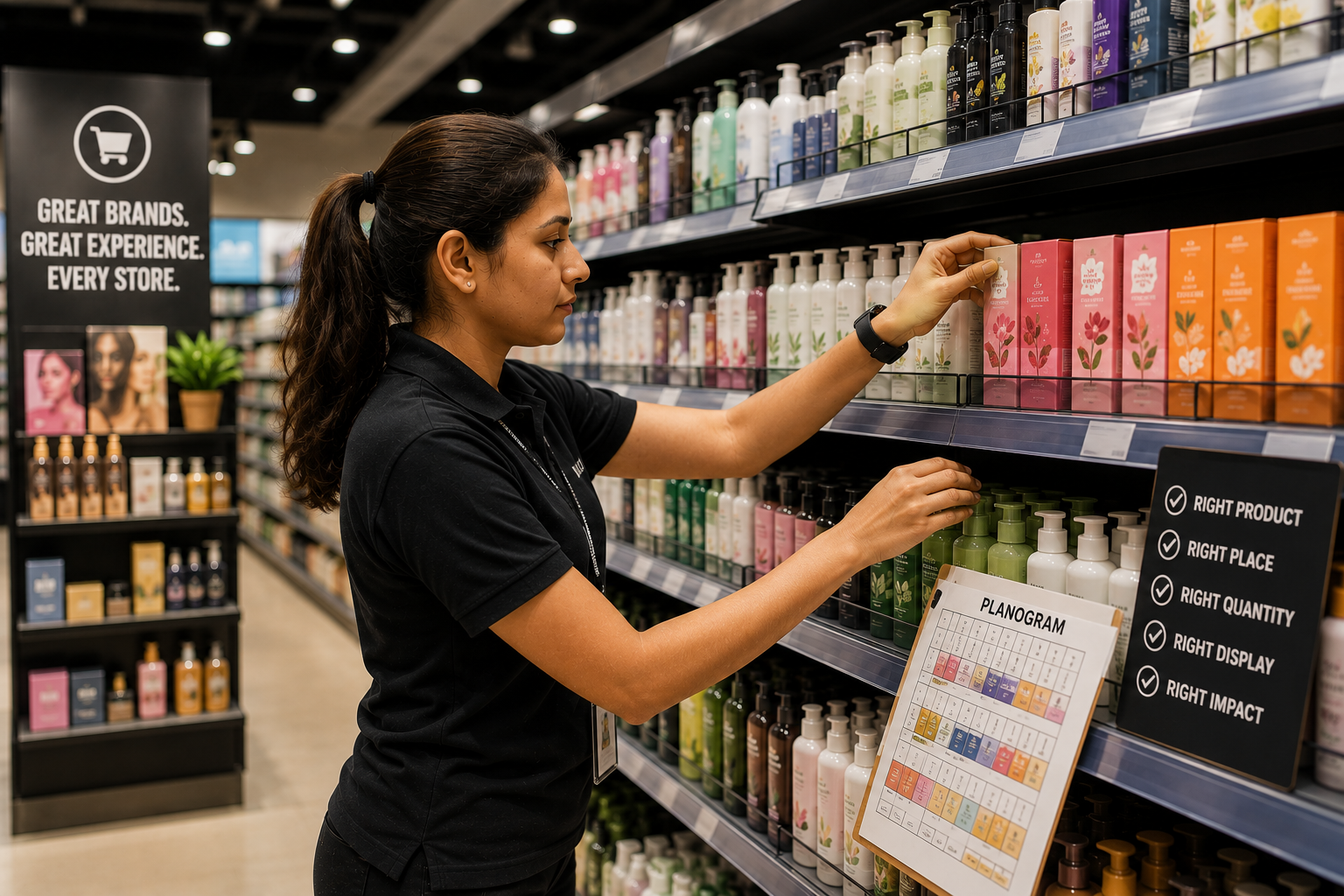
A visual merchandiser (VM) is a trained retail specialist responsible for how a brand looks, feels, and performs at the point of purchase. They manage product placement, shelf layout, display materials, in-store signage, and planogram compliance — ensuring that what the brand intends in a boardroom shows up on a shop floor in Pune, Patna, or Palakkad.
What Does a Visual Merchandiser Do Every Day?
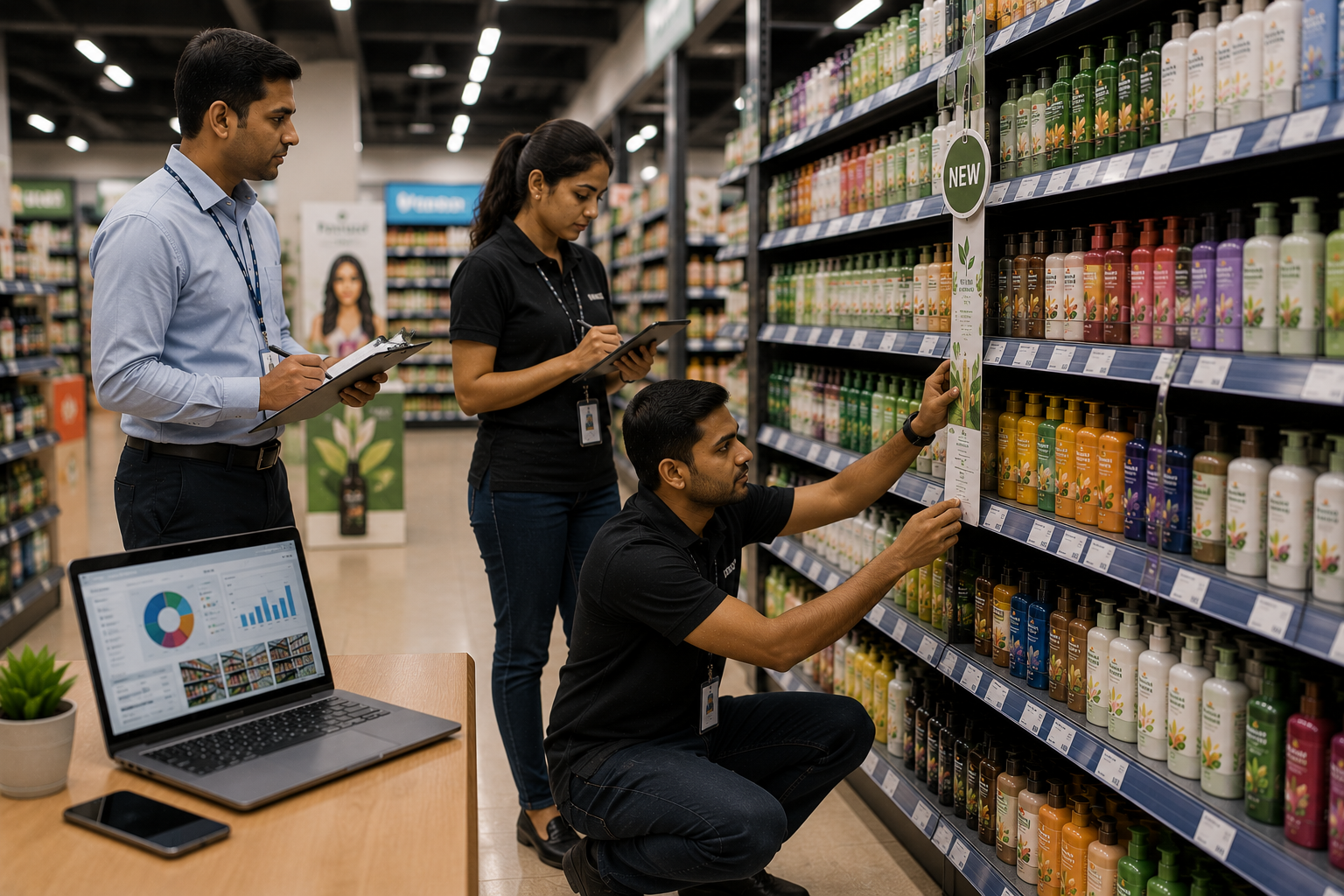
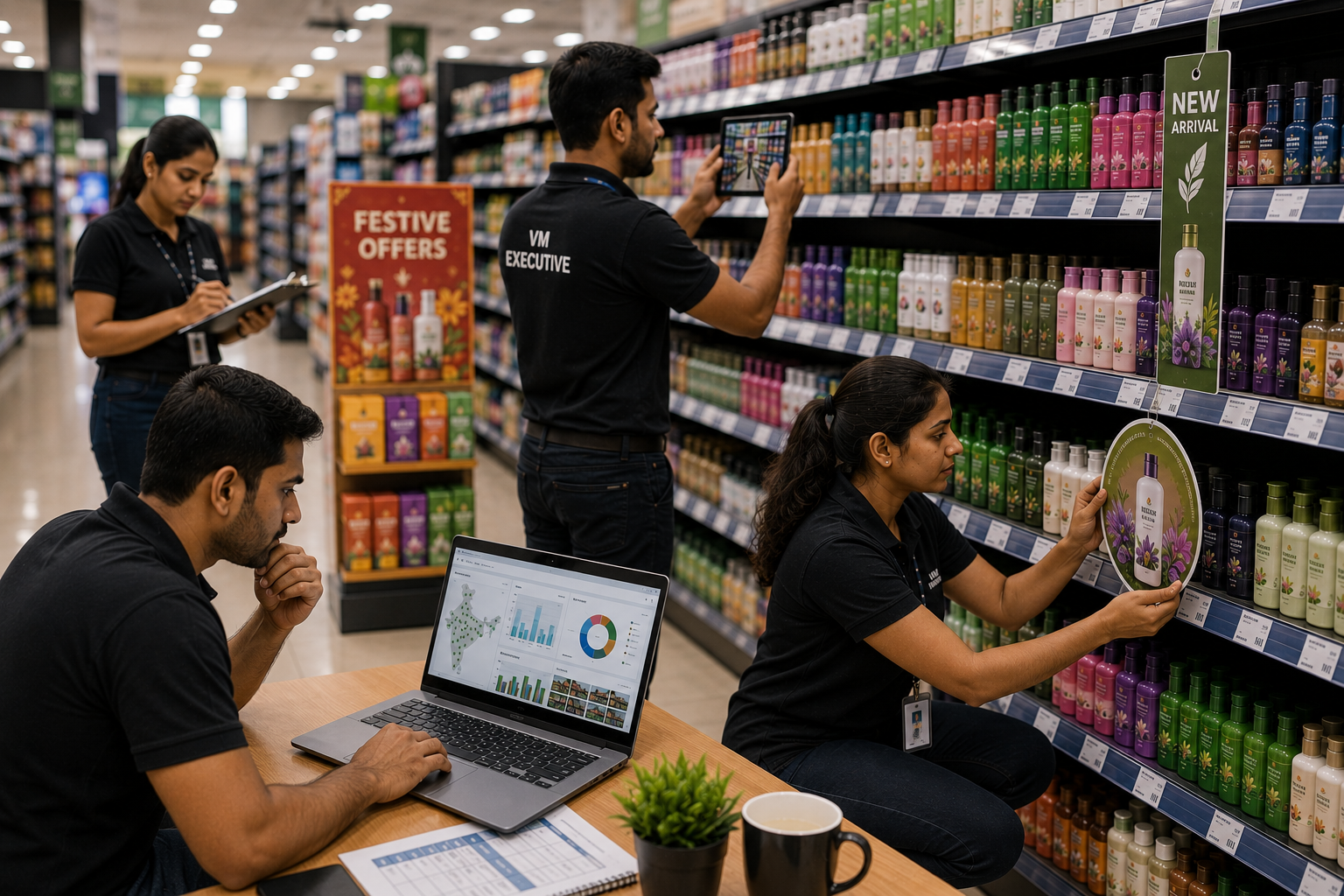
On any given day, a VM is doing all of the following, often simultaneously across multiple stores: Executing planograms, arranging products on shelf exactly as the brand brief specifies, with the right facings, heights, and adjacencies Installing and refreshing POP/POS material, putting up display units, wobblers, shelf strips, and standees, then replacing them when they’re damaged or outdated Conducting compliance audits, photographing shelf conditions, flagging out-of-stocks, and reporting deviations back to the brand team Coordinating with store staff, negotiating space, managing relationships with floor managers, and ensuring brand visibility isn’t compromised by a store’s own priorities Reporting back to headquarters, feeding real-time data on shelf share, competitor activity, and display conditions.
It is part logistics, part aesthetics, part negotiation and entirely dependent on consistent execution across hundreds of stores at once.

Why Do Most Brands Underestimate This Role?
Here’s the uncomfortable truth: most brands brief their VM requirements once, deploy a person, and assume it’s done. What they don’t account for is execution drift – the slow, invisible decline in in-store standards that happens over weeks when no one is checking. A display that looked perfect on day one gets disturbed by restocking. A planogram gets ignored by a new floor manager. A POP unit gets moved to make space for a competitor’s seasonal activation. Without a system for tracking, auditing, and correcting these deviations in real time, brand visibility erodes quietly — and sales follow. The brands that win at retail aren’t just the ones with the best product. They’re the ones with the most consistent shelf presence, day after day, across every store.
In-House VM vs. Outsourced VM: What's the Real Difference?
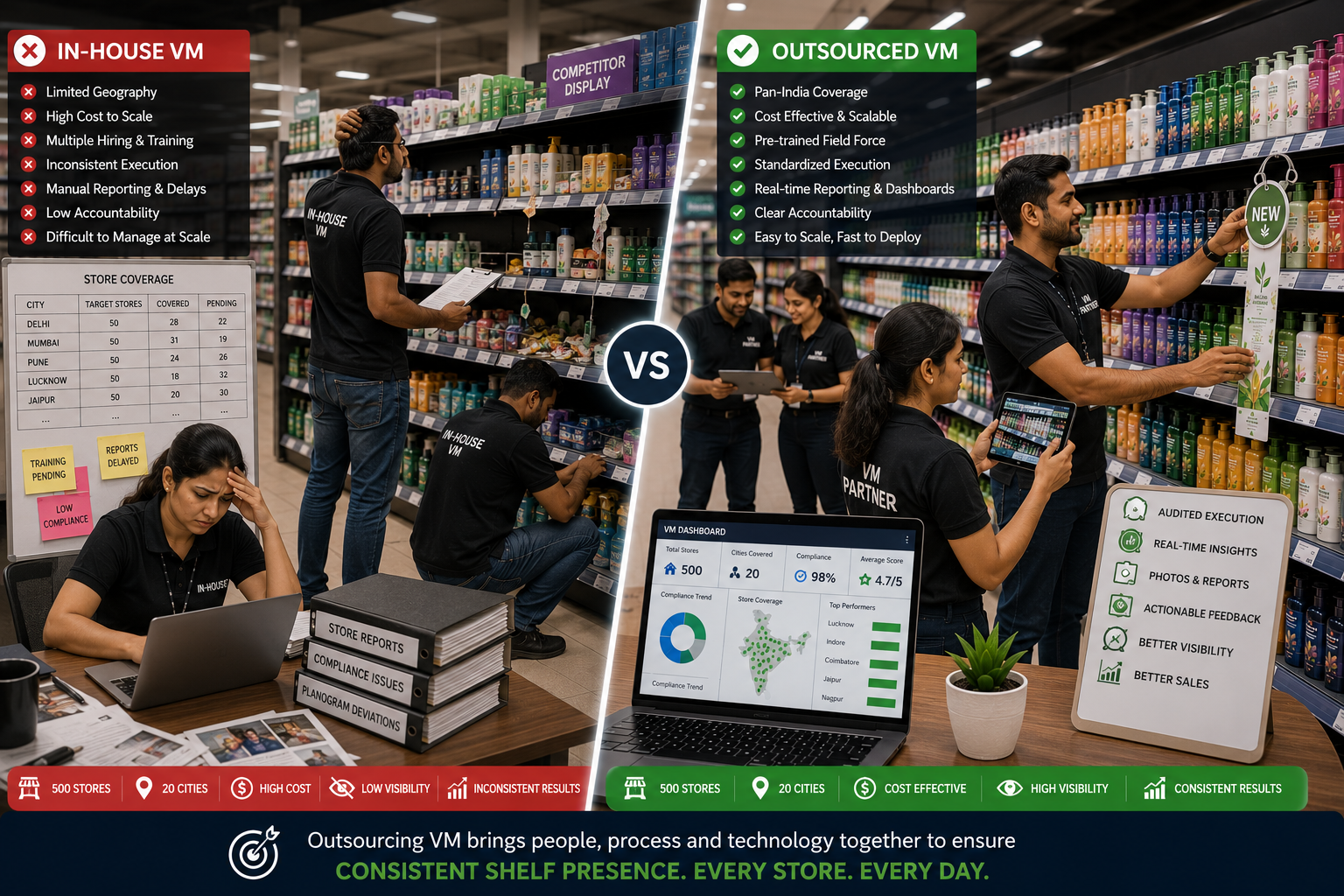
An in-house VM covers a limited geography and is expensive to scale. An outsourced visual merchandising partner brings a trained, geographically distributed team, already operational, already audited, already equipped with reporting tools. The difference becomes especially stark at scale.
Covering 500 stores across 20 cities within house VMs means 500 hiring decisions, 500 training cycles, and 500 individual accountability gaps. An outsourced partner absorbs all of that and brings tech-enabled compliance tracking on top.
For FMCG and consumer brands expanding into Tier 2 and Tier 3 cities, outsourcing visual merchandising isn’t just practical, it’s often the only viable model.
When Should a Brand Consider Outsourcing Visual Merchandising?
If any of these sound familiar, it’s time:
- Your shelf presence looks different in every city — and you’re not sure why
- You’re launching in new markets faster than your in-house team can follow
- POP material is being installed late, incorrectly, or not at all
- You have no real-time visibility into what your stores actually look like
- Festive season is approaching and you need to scale fast without permanent headcount
Retail is won or lost in the last 3 feet, the space between the shelf and the shopper. Visual merchandising is what protects that space. Getting it right, consistently, across every store in your network is not a nice-to-have. It’s the execution layer your brand can’t afford to leave to chance.
At Multiplier, our visual merchandising teams operate across cities in India — trained, tech-enabled, and accountable to your brand standards. Whether you need planogram execution, in-store display management, or a full retail visibility audit, we make sure what’s in your brand brief ends up on the shelf.