Why Is Brand Promoter Attrition So High and What Actually Reduces It?
By Swati Bhandari Malla
Field marketing and HR teams running a retail workforce in 2026 already know the number that keeps them up at night: some FMCG and retail brands are still losing 60-80% of their shopfloor promoters within the first 90 days. Exit interviews rarely tell the real story, the resignation reason says “personal reasons,” but the pattern underneath is far more consistent, and far more fixable.
It's Not the Money (Not Entirely)
Every review meeting starts with “let’s benchmark the incentive structure.” Sure, pay matters. But when brand promoters who’ve quit are actually asked why, the answer is almost never “I found ₹500 more elsewhere.” The real reasons are closer to what the day-to-day on the floor actually looks like:
- 10 to 12 hours on their feet, pitching the same three SKUs to a hundred customers who mostly walk past with no script that actually works for that footfall.
- Targets set by someone who’s never stood at that counter, on a day when the store ran out of stock by noon.
- A supervisor who only calls when numbers dip, never to ask how the shift actually went.
- Getting outshone by the promoter at the next counter over — sometimes from a competing brand, sometimes just a delivery gig paying out same-day.
- Feeling like a placeholder — the assumption being that if they leave, the next hire slots in by Monday.
That last one is the quiet killer. Promoter roles have long been run as a volume game: hire fast, deploy fast, backfill faster. In 2026, with gig platforms offering flexible hours and instant payouts, that math is breaking down. Promoters on the floor aren’t comparing one brand’s promoter program to another’s anymore — they’re comparing a full day of customer rejection and standing to a four-hour Zomato or Rapido shift that pays out the same evening.
What's Actually Moving the Needle
The brands bringing attrition down aren’t the ones throwing more cash at the problem. They’re the ones fixing what the shift feels like:
- Onboarding that includes real floor time. Not a slide deck — a shift or two shadowing an experienced promoter at the actual counter, learning the pitch that works for that store’s footfall.
- A supervisor who visits, not just calls. Someone who shows up on the floor occasionally, sees the stock-outs and difficult customers firsthand, and checks in on bad days not only the ones with missed targets.
- Visible next steps. Something as simple as “top performers get first pick of high-footfall outlets next quarter” gives a reason to push past the first hard month.
- Listening before they quit, not after. Short pulse check-ins at day 7, 30, and 60 catch the frustration while there’s still time to fix it.
The Real Shift
Attrition on the shopfloor isn’t a promoter problem. It’s a design problem, in how the role is onboarded, paid, supervised, and recognized for a workforce that’s spent years being treated as interchangeable. Fix what the shift actually feels like, and retention follows almost as a side effect.
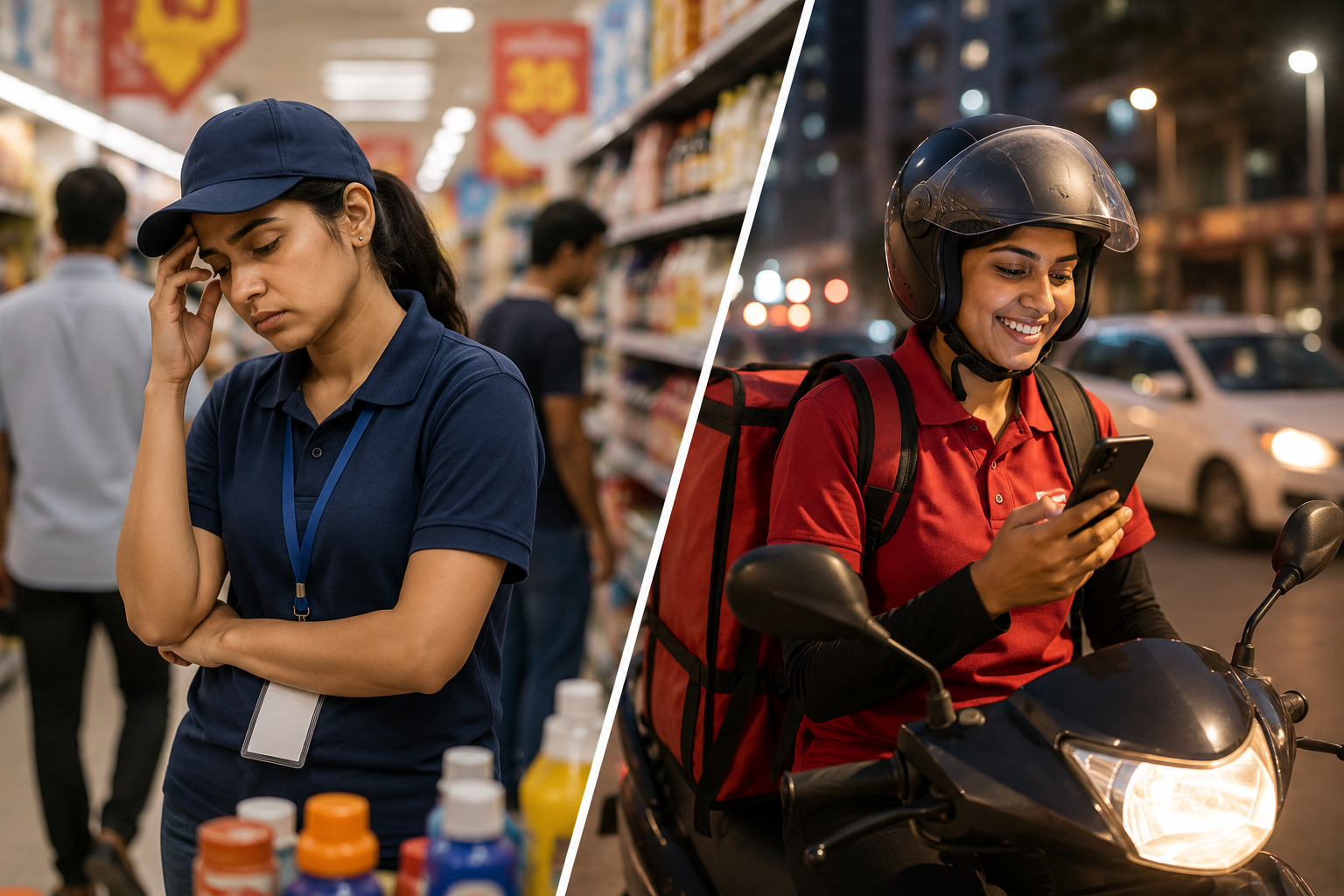
The brands winning this year aren’t the ones with the biggest incentive budgets. They’re the ones that stopped treating their brand promoters as a line item and started treating them like the frontline they actually are.