When Does an Indian Shopper Really Decide: At Home or at the Counter?

It depends on the category: high-value purchases are often shaped at home, while everyday and impulse purchases are often settled at the counter. For most brands, the real answer is both, and the counter gets the last word.
At Multiplier, we work in the final stretch of that journey: the store, the shelf and the conversation with the shopper. Across campaigns in many cities, one pattern stays familiar. A brand invests heavily in awareness, then sees sales lag at the shelf. The shopper knew the brand, but something at the counter changed the choice. That gap between intent and purchase is where field marketing earns its place.

What happens at home

Before a purchase, shoppers talk to family, watch videos, read reviews and compare prices. For big-ticket items like appliances, phones and furniture, much of the shortlist forms before the shopper leaves the house. This is where brand and digital marketing do their best work, and where a field team can’t help.

What happens at the counter

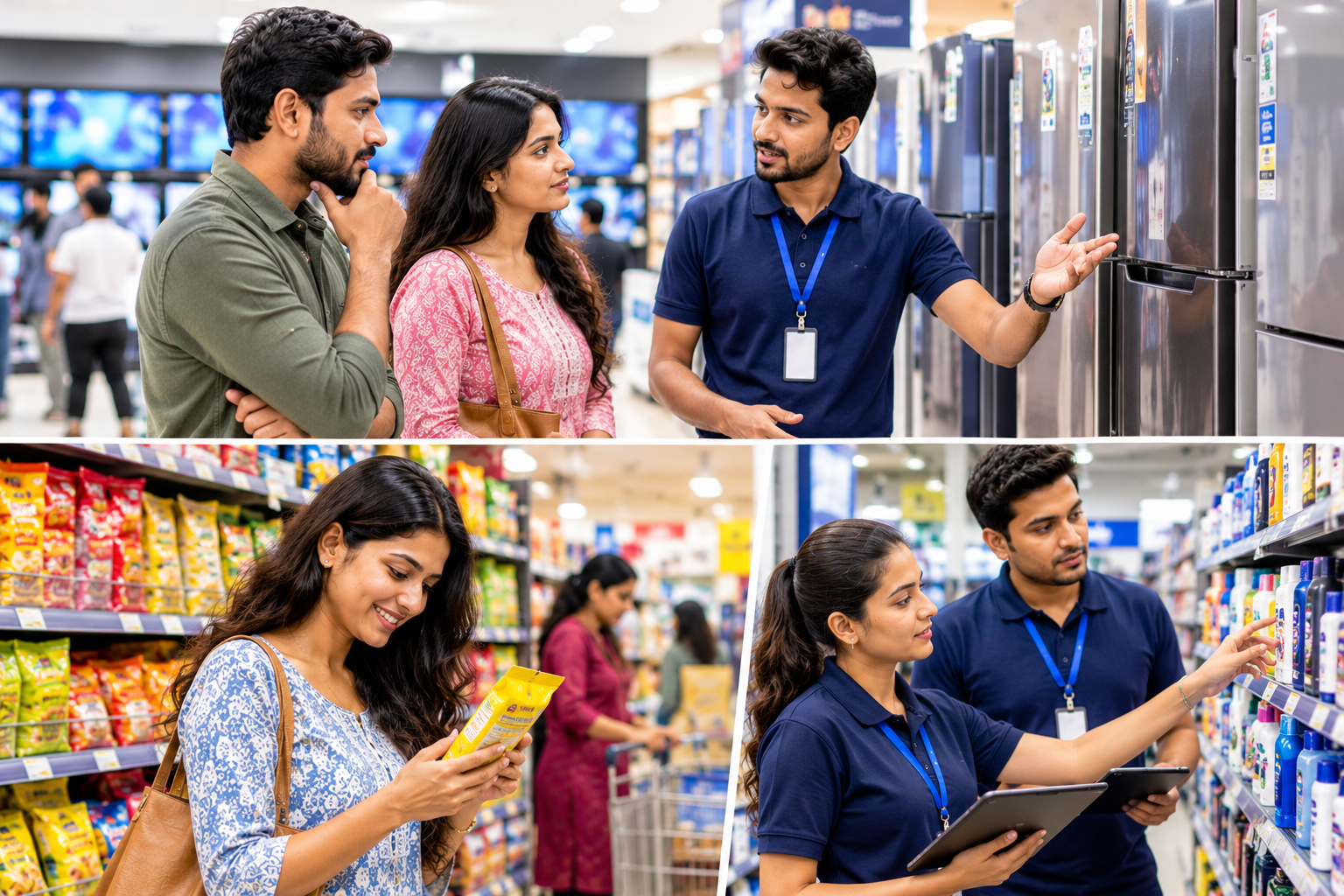
Inside the store, the situation changes quickly. Pack visibility, a price offer, a shopkeeper’s suggestion or a promoter’s demo can change a decision in seconds. In general trade, the retailer’s recommendation carries real weight, and shelf space is limited. A shopper who planned to buy one brand may leave with another because it was easy to find, in stock and clearly explained.

What we see on the ground

From our work in retail, a few things come up again and again:
  • Availability beats intent. Strong demand is wasted if the product isn’t on the shelf or the stock is hidden. Many “campaign failures” are really execution gaps.
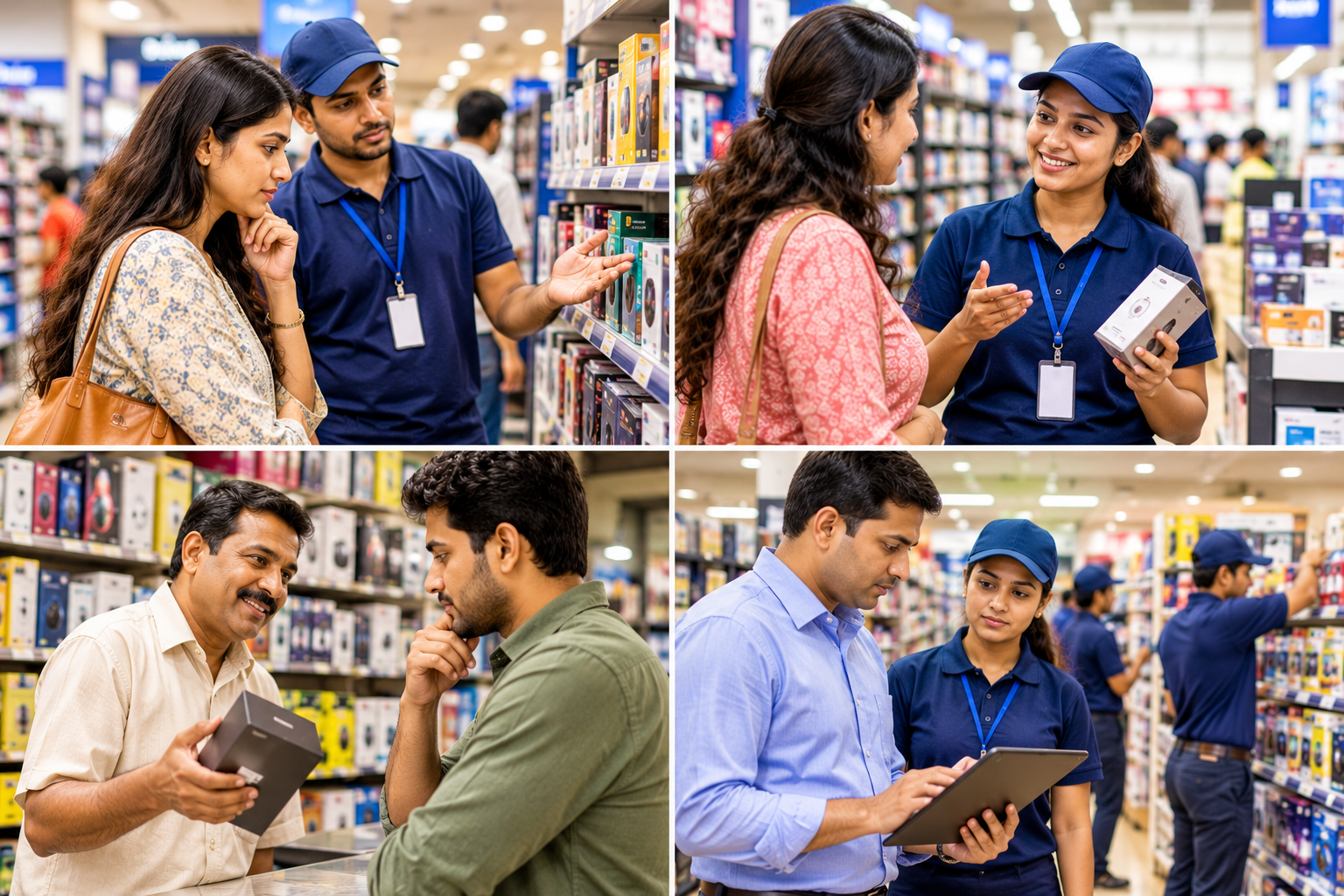
  • The first ten seconds matter. A promoter who greets the shopper, asks one question and explains one benefit usually does better than one who recites features.
  • Retailers are influencers. Shopkeepers recommend brands they trust and understand. Brands that train and engage retailers tend to get better recommendations.
  • Consistency is harder than creativity. A great idea in one store is easy. The same standard across hundreds of stores is the real test, and it depends on training, supervision and tracking.
These are observations from the field, not universal rules, and they vary by category and city. They do explain why we treat store-level execution as a discipline, not an afterthought.

Why the category changes the answer

A shopper buying a refrigerator may arrive with two models in mind. A shopper buying biscuits, paint or personal care may decide at the shelf, based on what is visible, available and recommended. The more routine or low-cost the purchase, the more power sits at the counter.

Where Multiplier fits

Our role is to make sure the decision made at home survives the walk to the shelf, and to win the decision when it’s still open. That means trained promoters and supervisors, retail visibility that follows brand standards, and daily tracking of attendance, photo proof and store feedback. When something slips, such as a missing display or a no-show, the brand finds out in time to fix it, not weeks later.

The bottom line

The shopper’s decision is not a single moment. It starts at home and is confirmed, or changed, at the counter. Brands that plan only for the first half lose the last mile. If you’re reviewing your next campaign, ask a simple question: what happens in the five minutes after your customer reaches the shelf?